
Helping Children Learn From Failure | Building Resilience in Kids
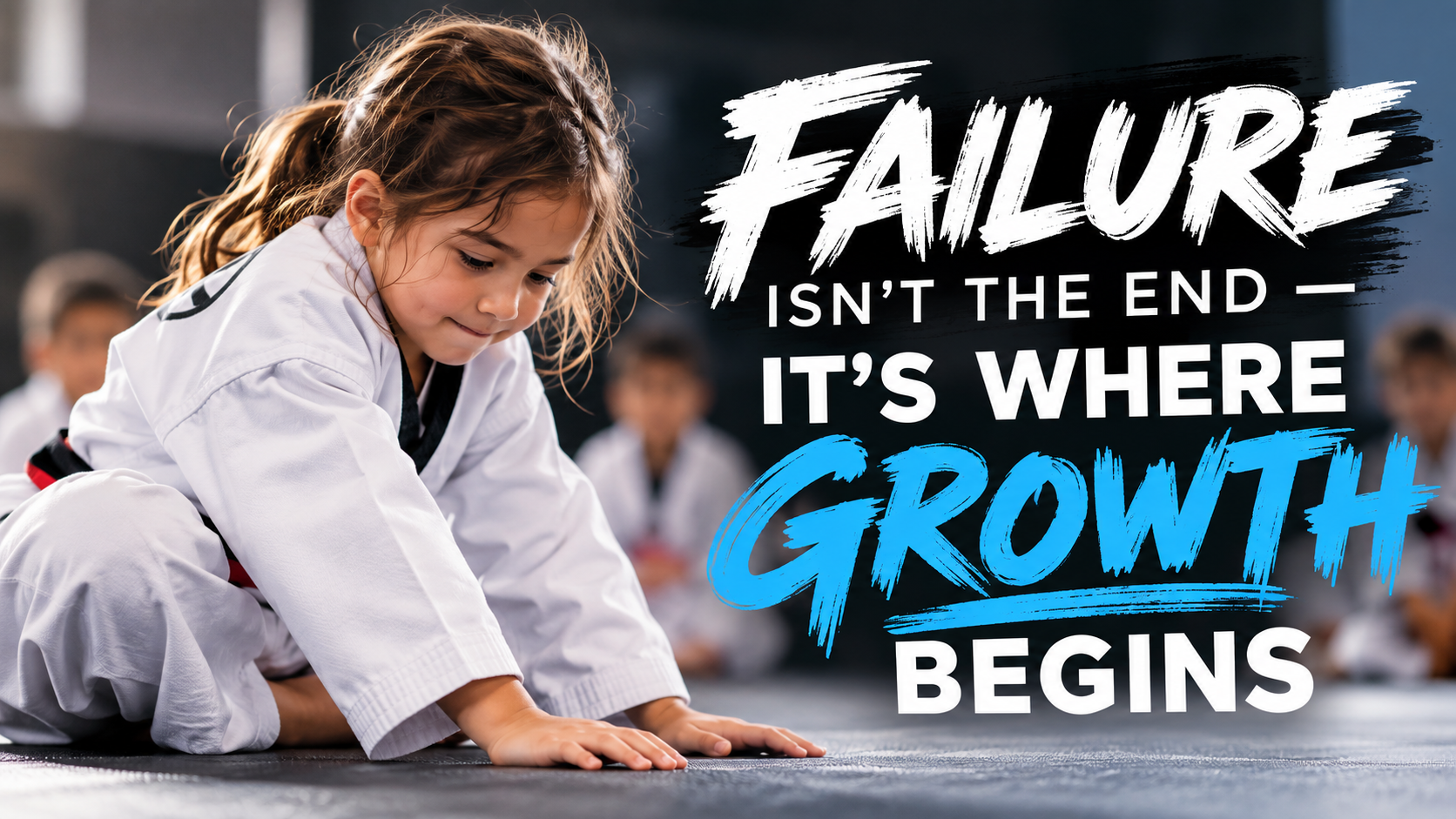
Failure Isn’t the End — It’s Where Growth Begins
As parents, teachers, and coaches, it’s natural to want children to succeed. We want them to earn good grades, perform well in sports, make friends, reach their goals, and feel confident in themselves.
But sometimes one of the best things we can do for a child is allow them to fail.
Failure can be uncomfortable. A child might lose a competition, struggle with a school assignment, forget part of a performance, have difficulty learning a new skill, or not achieve a goal they worked hard toward.
Those moments can bring disappointment, frustration, embarrassment, and even tears. But they can also become some of the most valuable learning experiences a child has.
Teaching children how to accept failure, learn from mistakes, and keep trying can help them develop resilience, confidence, perseverance, independence, and a healthy growth mindset.
Teach Children That Failure Is Part of Learning
One of the biggest lessons we can teach children is that failure doesn't mean they aren't capable.
It simply means they haven't mastered something yet.
Think about how children learn almost any physical skill. They don't successfully ride a bicycle the first time they sit on one. They don't perfectly perform a Taekwondo form the first time they learn it. They don't immediately master a cartwheel, Parkour vault, dance routine, or difficult kick.
They practice.
They make mistakes.
They adjust.
And they try again.
When children begin to understand that mistakes are a normal part of learning, they become less afraid of attempting difficult things.
That is an important part of developing a growth mindset in children.
Instead of thinking, “I'm bad at this,” we want children to learn to think, “I can't do this yet, but I can keep working on it.”
That one little word—yet—can make a huge difference.
Praise Effort, Not Just Results
Children naturally enjoy being praised when they succeed. There is nothing wrong with celebrating accomplishments, but it's equally important to recognize the work that led to them.
Instead of only saying:
“Great job! You won!”
Try recognizing the process:
“I saw how hard you practiced for this.”
“You didn't give up when that was difficult.”
“You made a mistake, figured out what happened, and tried again.”
“I'm proud of how you handled yourself even though things didn't go the way you wanted.”
When adults focus only on winning, grades, trophies, belts, or other results, children may begin to believe that success is the only thing that matters.
When we recognize effort, discipline, perseverance, improvement, and courage, we teach children that their actions matter even when the final result isn't what they hoped for.
Don't Rush to Rescue Children From Every Failure
Watching your child struggle can be difficult.
Our first instinct is often to jump in and fix the problem. Sometimes children absolutely need our help, but other times a little struggle can be healthy.
When adults immediately solve every problem, children can miss an opportunity to develop their own problem-solving skills and emotional resilience.
Instead, give them an opportunity to think about what happened.
Ask questions such as:
“What do you think happened?”
“What could you try differently next time?”
“What did you learn from this?”
“What can you practice before you try again?”
These questions shift the focus away from the failure itself and toward what happens next.
Eventually, we want children to develop the ability to ask themselves those same questions.
It's Okay for Kids to Be Disappointed
Teaching children how to handle failure doesn't mean telling them they shouldn't be upset.
Disappointment is normal.
If a child practiced hard for a competition and didn't win, it's understandable for them to feel disappointed. If they worked toward their next belt rank and weren't ready to test, they may be frustrated. If they practiced a difficult skill and still couldn't perform it, they may feel discouraged.
We don't need to pretend those feelings don't exist.
Instead, we can acknowledge the disappointment while helping children understand that one difficult moment doesn't define them.
They can be disappointed today and still come back tomorrow ready to work.
That's resilience.
Martial Arts Gives Children a Safe Place to Experience Challenges
One reason martial arts for kids can be so valuable is that children regularly encounter challenges in a structured and supportive environment.
At Team XSAMA School of Movement, students aren't expected to master every skill immediately.
Sometimes they miss a kick.
Sometimes they forget part of a Taekwondo form.
Sometimes they struggle to break a board.
They may have difficulty with a Parkour skill, gymnastics technique, dance routine, or another movement they're learning.
And sometimes another student learns something faster than they do.
That's okay.
The goal isn't to eliminate those challenges. The goal is to teach children how to respond to them.
A student who struggles with a skill, practices it, receives coaching, makes adjustments, and eventually succeeds learns something much bigger than the skill itself.
They learn:
“I can do hard things.”
Failure Can Build Confidence
It might sound strange, but experiencing failure can actually help build confidence in children.
Real confidence doesn't come from everything always being easy.
It comes from knowing that when something becomes difficult, you can handle it.
A child who has never struggled may be afraid when they eventually encounter something they can't immediately do.
A child who has struggled before—and successfully worked through it—has evidence that challenges can be overcome.
They've already learned:
“I've been frustrated before.”
“I've made mistakes before.”
“I've failed before.”
“And I figured it out.”
That creates a much deeper kind of confidence.
Martial Arts Lessons Go Beyond the Training Floor
Parents often enroll children in Taekwondo classes or kids martial arts programs because they want them to become more active, learn self-defense, improve coordination, or develop discipline.
But some of the most important lessons have nothing to do with kicks and punches.
Learning to listen to feedback, practice consistently, overcome frustration, respect others, handle disappointment, and keep working toward long-term goals are skills children can carry into school, sports, friendships, future careers, and adulthood.
At Team XSAMA School of Movement, our Taekwondo, Parkour, Hip Hop Dance, and Tumbling & Tricking programs give students opportunities to challenge themselves physically and mentally while developing confidence and perseverance.
We aren't trying to teach children how to never fail.
We're trying to help them understand what to do when they do.
Teach Them to Get Back Up
Every child will experience failure at some point.
We can't prevent every disappointment, and we shouldn't try.
What we can do is give children the tools to understand that failure isn't permanent.
A failed attempt can become practice.
A mistake can become a lesson.
A disappointment can become motivation.
And a difficult experience can become the moment a child discovers just how resilient they really are.
Whether it's in school, sports, Taekwondo, martial arts, Parkour, dance, gymnastics, or everyday life, children who learn how to accept failure and keep moving forward are developing skills that can serve them for the rest of their lives.
Success isn't about never falling down. It's learning that falling down doesn't mean you have to stay there.
#TeamXSAMA #KidsMartialArts #TaekwondoForKids #SanDiegoKids #SanDiegoMartialArts #KidsTaekwondo #BuildingResilience #GrowthMindset #ConfidenceForKids #KidsActivities #ChildDevelopment #MartialArtsForKids